BUENOS AIRES, Dec 3, 2025 – Total News Agency (TNA). The figure of María Fernanda Sena Argis has become the center of judicial attention following the disclosure of a key document from the Central Bank of the Argentine Republic (BCRA), exposing her previous history of serious irregularities. Sena Argis was in charge of Free Change SAS, a company that directly preceded her current role at Sur Finanzas, the financial firm linked to the president of the AFA, Claudio 'Chiqui' Tapia, which is currently under investigation for alleged tax evasion and money laundering.
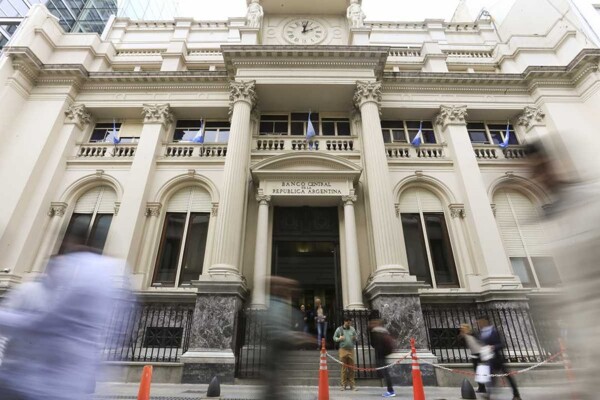
Financial Summary No. 1604 from the BCRA describes in detail a series of irregular maneuvers, regulatory breaches, inconsistent documentation, rapid corporate share transfers, and deliberate obstacles to the entity's inspection process. During verifications at various addresses declared by the company, inspectors found no commercial activity at any of them.
According to verifiable records, María Fernanda Sena Argis is listed as the registered owner of the domain www.surfinanzas.com.ar, the official website of Sur Finanzas Group SA, registered on October 14, 2021. Recent commercial reports also indicate that she is part of the corporate structure alongside Graciela Beatriz Vallejo, the sister of Ariel Vallejo, Sena Argis's partner and the visible shareholder of the conglomerate.
In turn, Sur Finanzas faces a complaint filed with the La Plata Federal Chamber by the Revenue and Customs Control Agency (ARCA), accusing it of a multimillion-dollar tax evasion scheme and the alleged laundering of over 818 billion pesos through the use of virtual wallets, bank accounts of monotributistas (simplified tax regime payers) without economic capacity, and fictitious taxpayers.
The pattern observed by the BCRA in the Free Change case — lack of documentary traceability, inconsistent addresses, rotating corporate structures, the use of front persons, and unusual financial movements — coincides remarkably with the elements that the Federal Justice is currently investigating in the Sur Finanzas case.
The disqualification issued by the Central Bank, in practice, did not impact Sena Argis's subsequent activity, who continued to be linked to high-magnitude financial operations.
The conclusions were conclusive: million-dollar fines and a six-year disqualification from holding any position in entities covered by Law 21.526.
The existence of fake addresses, empty offices, and contradictory corporate documentation was detected, all during a period of successive shareholding changes that raised suspicions. The file mentions four responsible individuals: Marcela Yagüe, María Fernanda Sena Argis, Matías Bocca, and Ovidio Bazán, all sanctioned with individual fines of over 10 million pesos and disqualifications.
For the BCRA, the conduct of those involved constituted an act of 'very high severity,' as it completely prevented regulatory control over financial operations that were supposed to be audited.
Sena Argis argued in her defense that she was unaware of the current regulations and that the firm was inactive during her administration, so she decided to sell the shares quickly. However, this sanction did not prevent Sena Argis from remaining active within private financial structures.
The Central Bank's investigation into Free Change—considered today a direct precedent for understanding how Sur Finanzas works—focused on two essential points: the breach of the Register of Currency Exchange Operators (ROC) and the systematic obstruction of oversight tasks, according to Realpolitik.
According to sources close to the case, this continuity represents a piece of information of 'extreme relevance' when analyzing responsibilities and potential illicit maneuvers within Sur Finanzas.
The BCRA's summary, now incorporated as evidence in various investigations, provides a crucial framework to reconstruct not only the operational role of María Fernanda Sena Argis but also the corporate scaffolding that supports one of the year's most resonant financial files, whose ramifications reach the institutional environment of Argentine football.
The company, in addition, received a penalty of 36 million pesos.
The Central Bank rejected its arguments point by point: it insisted that lack of knowledge does not exempt one from responsibility and that the irregular documentation presented was generated during her management period.
The sanction, far from being an isolated precedent, has become central to the present case.